Saturday, July 3, 2010

Droog Townhouse by Atelier Bow-Wow

Droog Townhouse by Atelier Bow-Wow

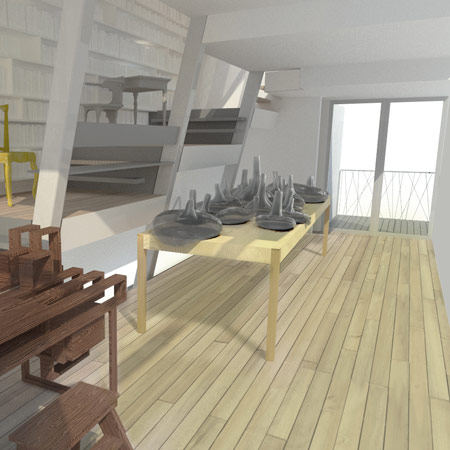
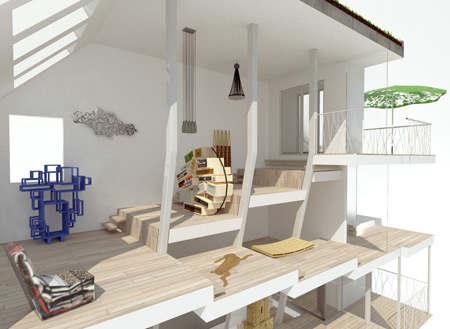
At their Amsterdam headquarters Dutch design collective Droog present plans for a house by Japanese studio Atelier Bow-Wow, to be built behind an existing townhouse facade in Amsterdam and furnished entirely with the Droog collection.
Droog Townhouse by Atelier Bow-Wow

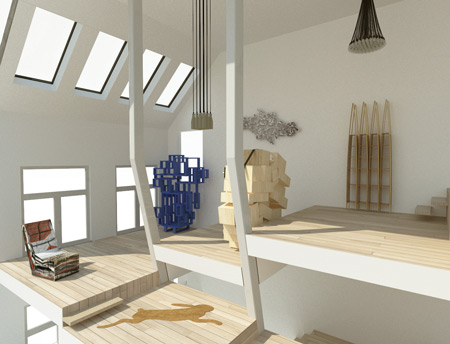
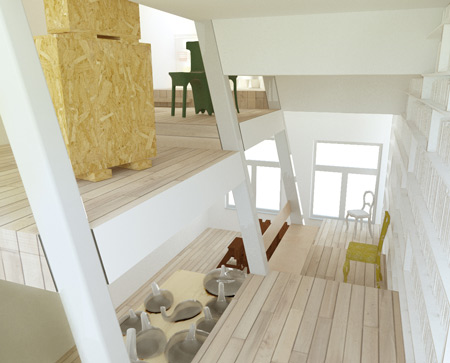
Rather than dividing the interior with a staircase, the Droog Townhouse will comprise a series of stepped levels throughout the house.
Droog Townhouse by Atelier Bow-Wow

The exhibition also includes details of a hotel by Atelier Bow-Wow to be built nearby.
Droog Townhouse by Atelier Bow-Wow

The show continues until 18 July.

Droog Townhouse by Atelier Bow-Wow

Here’s some more information from Droog


Droog & Atelier Bow-Wow

Droog Amsterdam presents the plans for Droog Townhouse and a new hotel by Tokyo-based Atelier Bow-Wow. The exhibition opens June 24th and goes until July 18th.
Droog Townhouse by Atelier Bow-Wow

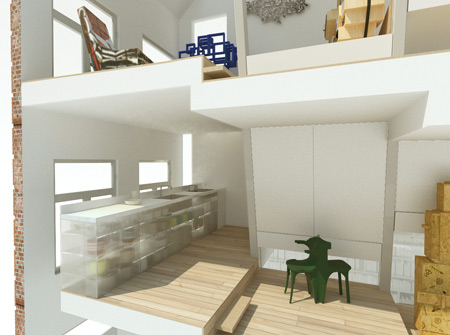
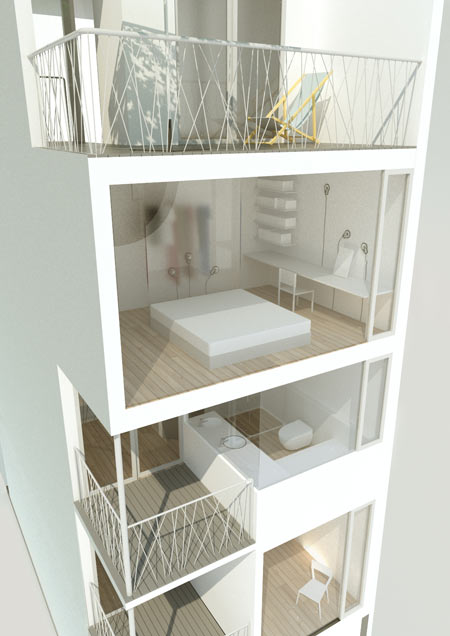
Commissioned by Amsterdam housing association Ymere, Townhouse is Droog’s first house. The interior is furnished with Droog products, such as the classic 1991 Ragchair and Milk bottle lamp by Tejo Remy, the Heat wave radiator by Joris Laarman and the Tile kitchen by Arnout Visser, Erik Jan Kwakkel, and Peter van der Jagt. Imagined for a single, a contemporary family or as a VIP guesthouse, the one-of-a-kind layout is a continuous flow of spaces, each with its own functionality merging with circulation space. Private rooms such as the master and optional guest bed, the bath, the balcony and a sound-proof refuse are separated by shared space, creating a unique combination of contact and independence, spaciousness and intimacy.

“In townhouse typology that is narrow and vertical, it is unavoidable for the staircase to dictate a layout that is clearly divided into floors and rooms. We break this by proposing a house without a staircase—instead the whole house becomes inhabitable steps. Each step performs as the place for Droog furniture and living.” – Atelier Bow-Wow
Droog Townhouse by Atelier Bow-Wow

Hotel

Around the corner from Droog Amsterdam will soon be a new 10-room member-only hotel, concept restaurant and exhibition space. Leaving the canal-facing front façade intact, Atelier Bow-Wow created an intricate inner courtyard façade inspired by Amsterdam’s historic architecture. The hotel restaurant will host new concept dinners by invited designers and chefs, improvising with local market left-overs and practicing the act of eating slowly yet attentively. The street level will host exhibitions.

“Both projects had a similar starting point, in that they were both renovation projects, and that the street façades needed to be kept. However, Droog took each project in a completely different direction.” – Atelier Bow-Wow

Notariaat by Atelier Vens Vanbelle

Maarten Vanbelle by Atelier Vens Vanbelle

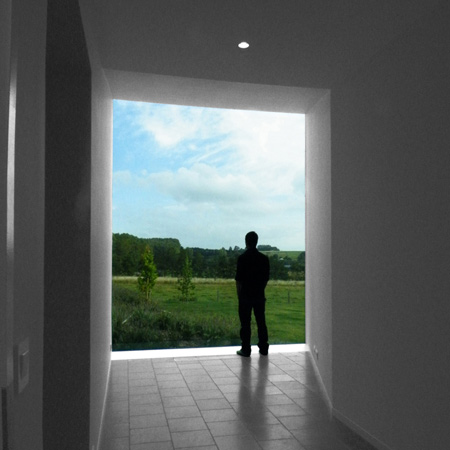
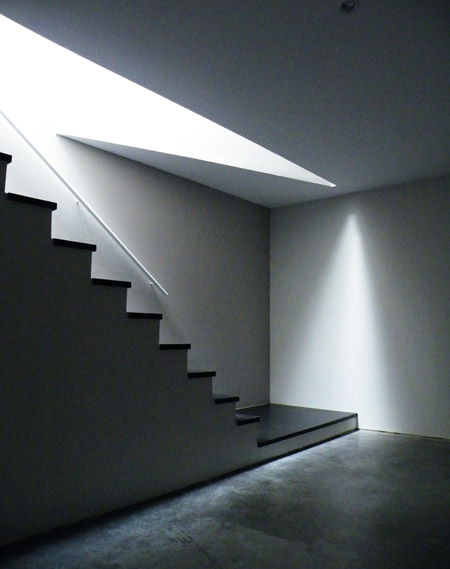
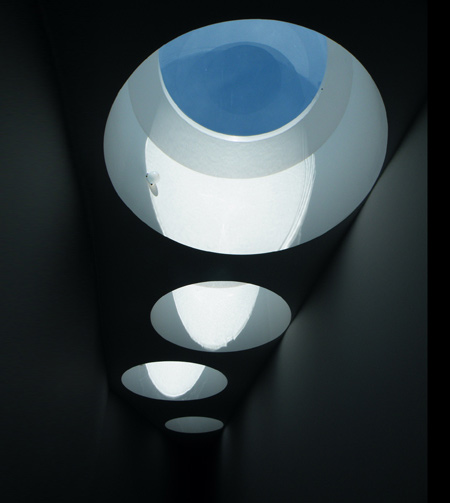
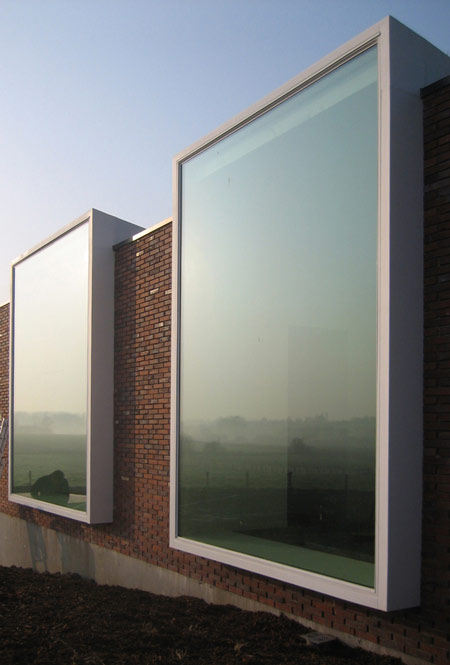
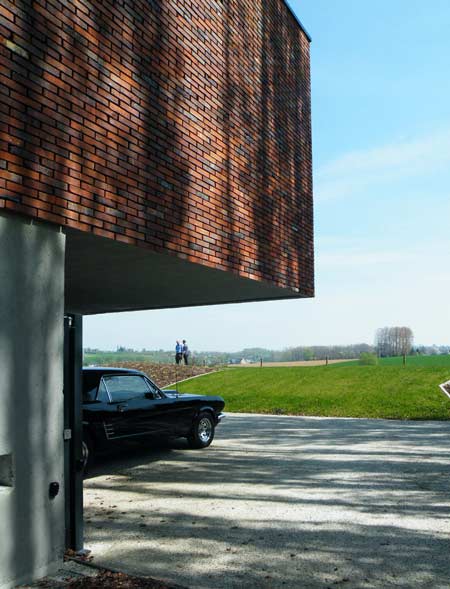
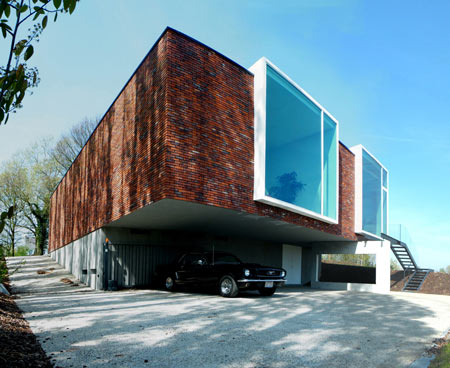
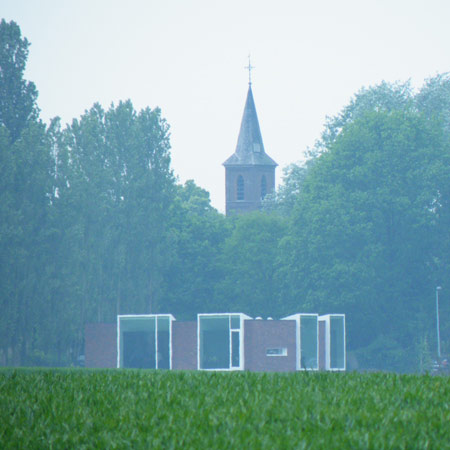
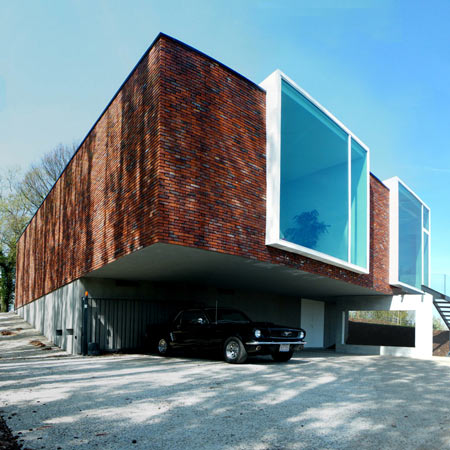
This office building in the Belgian hills by architects Atelier Vens Vanbelle has a brick facade broken by huge windows overlooking the surrounding farmland.

Maarten Vanbelle by Atelier Vens Vanbelle

The offices, waiting room and kitchen open out to the views on two sides, turning away from the adjacent street and restaurant.

Maarten Vanbelle by Atelier Vens Vanbelle

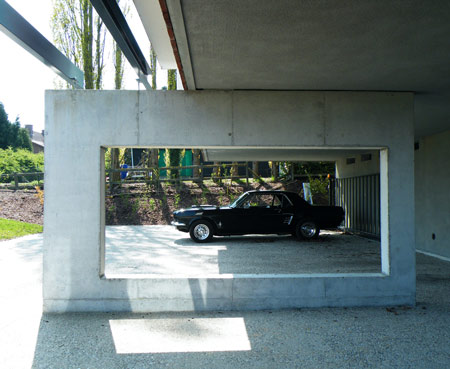
The building is cantilevered at the back to accommodate staff parking beneath.

Maarten Vanbelle by Atelier Vens Vanbelle

Here are some more details from the architects:


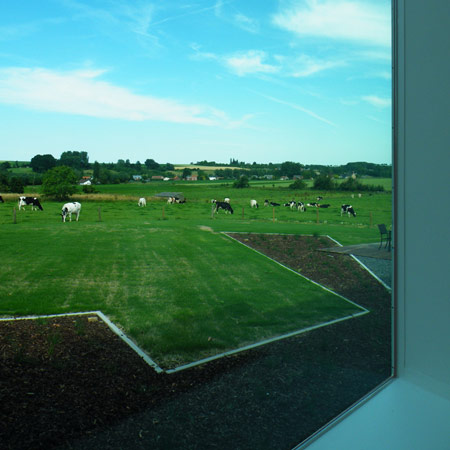
The building site is situated at the end of a small street in the small village of Horebeke in the Flemish Ardennes, next to a restaurant. The view from the site is splendid: the landscape slopes slowly and offers an overview to an untouched agricultural area spread over two kilometers.

Maarten Vanbelle by Atelier Vens Vanbelle

This kind of impressive landscapes asks for discrete admiration, just like the design assignment itself.

Maarten Vanbelle by Atelier Vens Vanbelle

A notary must be a building that establishes itself in a neutral way and it should be accessible for each type of visitor.

Maarten Vanbelle by Atelier Vens Vanbelle

We believe building in a landscape like this asks for the same kind of neutrality.

This was translated in a rough brick volume which is semi-closed to the street side and the restaurant.

Maarten Vanbelle by Atelier Vens Vanbelle

The entrance to the building is marked by a white volume made of steel plates.

Maarten Vanbelle by Atelier Vens Vanbelle

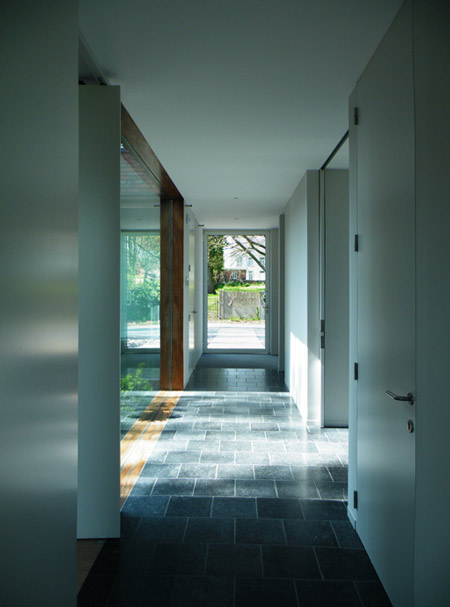
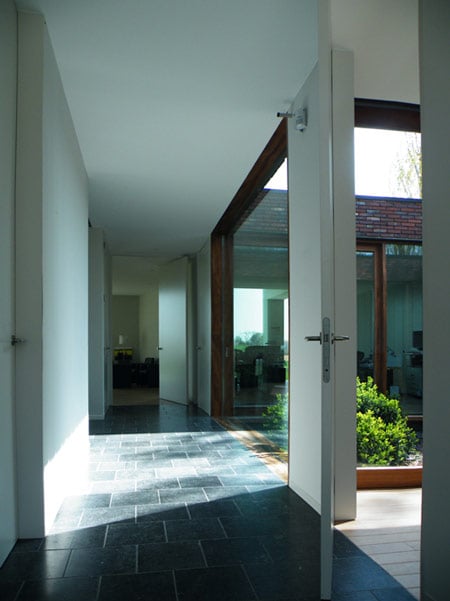
Walking through this white volume, the visitor enters a corridor looking out over a patio on the right side.

Maarten Vanbelle by Atelier Vens Vanbelle

On the left side the corridor bends to the waiting room which opens cone-shaped to the landscape.

Maarten Vanbelle by Atelier Vens Vanbelle

The kitchen and the offices open in a similar way to the outside. The peaceful landscape is framed through the windows like colourful paintings in the white interior.

Maarten Vanbelle by Atelier Vens Vanbelle

The back of the building cantilevers over the sloping terrain. The staff can park under the building and the cars form no visual obstruction from within the building.

Magma Art Bookshop by Blustin Heath Design

magma-shop-by-blustin-heath-design-4.jpg

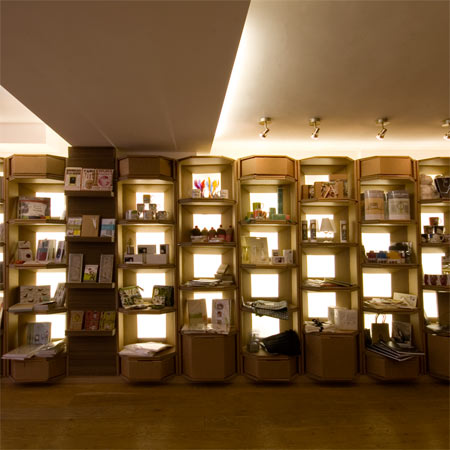
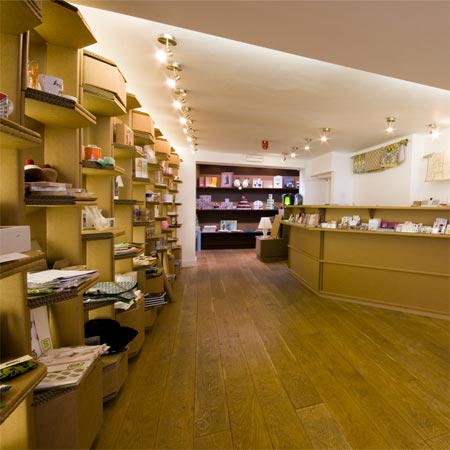
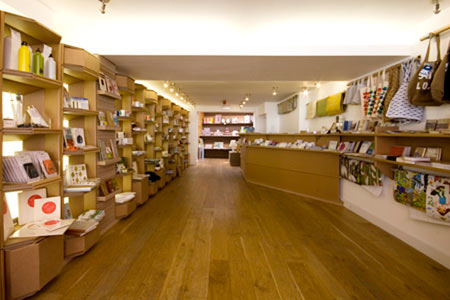
London designers Blustin Heath have designed a cardboard interior for the Magma Art Bookshop.

magma-shop-by-blustin-heath-design.jpg

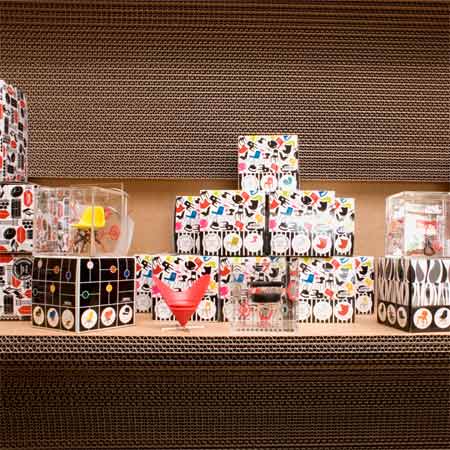
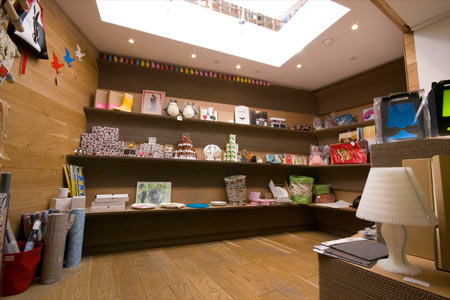
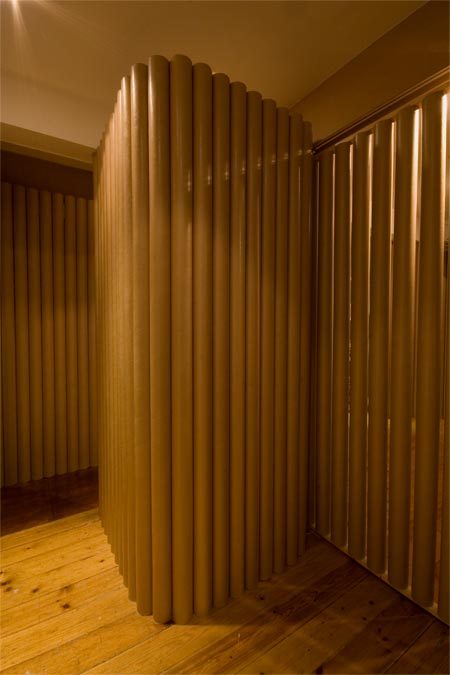
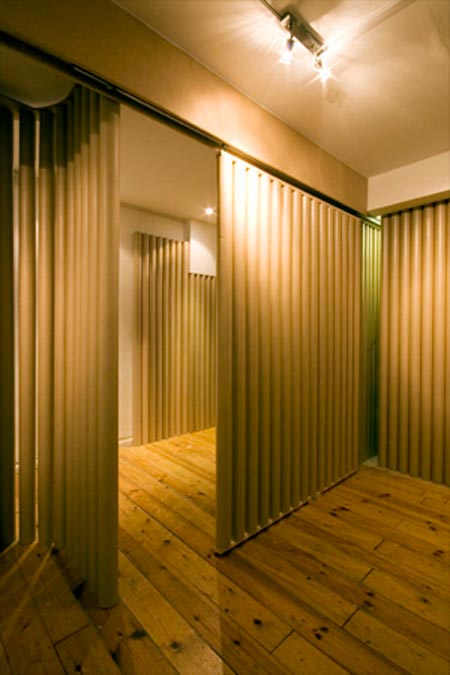
Completed in August 2007 on Earlham Street in London, the entire shop including shelving systems, counter surfaces and changing rooms is made from treated cardboard. Elements can be replaced simply and cheaply.

magma-shop-by-blustin-heath-design-2.jpg

The following is from Blustin Heath Design:

Description of project: We designed the first product store for Magma Art bookshop using only cardboard as the construction material throughout.

magma-shop-by-blustin-heath-design-5.jpg

The main display wall was conceived as a flat pack system – it folds into an easy to assembly solid, sculptural display system. Therefore it can be altered, added to or replaced simply and cheaply.

magma-shop-by-blustin-heath-design-6.jpg

The main counter used folded cardboard to provide a strong piece of furniture with all the complexities of storage, cash register and display cases.

magma-shop-by-blustin-heath-design-3.jpg

Finally the rear area was conceived as the grotto and as such a complex geography of cardboard has been created. By laminating and gradiating the cardboard we have formed a dense display room.

magma-shop-by-blustin-heath-design-7.jpg

Finally downstairs the changing rooms are constructed from sliding and fixed panels of cardboard tubes.

Art in Interior


Related Posts with Thumbnails